I have over experience as a baseball coach, working across rec leagues, travel baseball, travel softball and high school programs. I’ve coached players ranging in age from 4 to 20, including those in our college-age travel teams. My own baseball journey began at age 7 and eventually ended on a Division 1 College Baseball team.
In addition to my sports coaching background, I have over than 20 years of experience in the corporate world of leadership development. Over time, I’ve come to recognize that many of the lessons learned on the baseball or softball field translate directly to the broader world of leadership development and people management.
I’ve been fortunate to learn from many outstanding baseball coaches and corporate leaders along the way.
A Major League Baseball season stretches across 162 games. College baseball and softball seasons run around 50. High school and youth seasons may only reach 20. No matter the level, the ultimate goal is the same—win the World Series, the College World Series, or a State Championship. Those are the big results everyone sees. But what often goes unnoticed is how those outcomes are built.
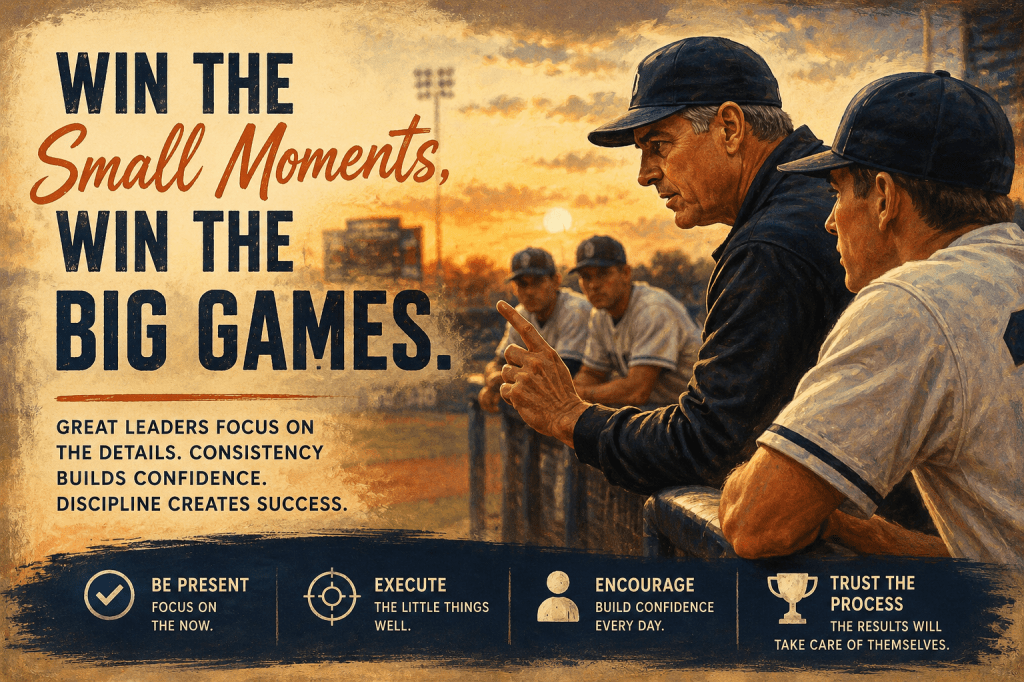
They are built on small wins. In baseball and softball, success isn’t created in a single moment. It’s constructed inning by inning, pitch by pitch. A well-executed bunt. A hitter working a full count and drawing a walk. A catcher blocking a ball in the dirt to prevent a runner from advancing. These moments rarely make highlight reels, but they change games. And games, over time, define seasons.
The best teams understand this. They don’t just focus on the scoreboard—they focus on execution. They know that winning a championship isn’t about one big swing or one heroic play. It’s about consistently doing the little things right, over and over again. Move the runner. Hit the cutoff. Make the routine play. Control the count. Limit free bases.
Each of these is a small win.
Individually, they may seem insignificant. But together, they compound.
The same principle applies in leadership. Most leaders are focused on big outcomes—hitting targets, improving engagement, driving results. But those outcomes are not created in quarterly reviews or annual plans. They are built in the daily interactions leaders have with their teams.
A quick check-in. A piece of timely feedback. Recognizing someone’s effort. Holding a clear expectation.
These are the leadership equivalents of winning a pitch.
Great leaders don’t wait for big moments to lead. They win the small moments consistently. They understand that trust, performance, and culture are not built overnight—they are built through repeated, intentional actions. And just like in baseball, those small wins compound.
Over time, they create stronger teams. Better habits. Higher standards. And ultimately, better results.
The challenge—for both players and leaders—is discipline. It’s easy to get distracted by the big picture. It’s harder to stay focused on the next pitch, the next conversation, the next opportunity to execute well.
But that’s where success lives. Not in the big moment—but in the accumulation of small ones.
Because in the end, championships—and great leadership—are not won all at once.
In both baseball and leadership, our first attempt at something new rarely goes perfectly. In fact, sometimes it fails completely. But the real problem isn’t the failure itself. Failure is part of learning—we’ve talked about that before. The real problem is failing to adjust.
Progress comes from the adjustments we make after things don’t go as planned.
In baseball and softball, the best hitters separate themselves from average players not because they never fail, but because they adjust faster. If a hitter is late on a fastball, the result is usually predictable: a foul ball out of play. The important question isn’t what just happened—it’s what happens next.
Some hitters step back into the box and simply hope they time the next pitch better. But hope is not a strategy.
Better hitters make adjustments. They might shorten their stride or eliminate it altogether. They may start their load earlier so their body is ready sooner. They might challenge themselves in practice by facing higher pitching speeds so the game begins to feel slower. Through trial, failure, and repetition, the adjustment eventually becomes second nature. The same principle applies in leadership. Many leaders struggle the first time they encounter certain situations. Maybe it’s delivering tough feedback to a direct report. Maybe it’s holding someone accountable for poor performance. Maybe it’s navigating a difficult conversation where emotions are running high. These moments rarely feel comfortable the first time.
But leaders who improve treat these moments the same way great hitters treat an at-bat—they reflect and adjust.
After a difficult conversation, it helps to pause and think about what went well and what didn’t. What would you handle differently next time? What questions could you ask earlier? How might you manage the emotional side of the conversation better?
Leaders who take a few notes after these moments create a powerful learning loop. Over time, those reflections turn into better judgment, better timing, and more confidence.
Leaders who simply “wing it” each time often find themselves repeating the same mistakes.
But leaders who adjust grow stronger with every experience.
Hard work matters. Effort matters. Preparation matters.
But in both baseball and leadership, the real separator is adjustment.Good leaders work hard.
It looks like the same drill, again. The same rep, again. The same uncomfortable moment where you realize you’re not as consistent as you thought you were. And in a world that celebrates quick wins, highlight reels, and “natural talent,” repetition can feel boring—or worse, unnecessary. But mastery is built in the reps.
In baseball and softball no one accidentally becomes a great hitter. Even the best in the world fail most of the time. What separates them isn’t perfection; it’s preparation. They’ve seen the pitch before. Their body has felt that movement pattern thousands of times. Their eyes have tracked that release point in practice so often that the game feels slower. Repetition creates familiarity, and familiarity creates confidence.. And here’s the key: not all practice is equal.
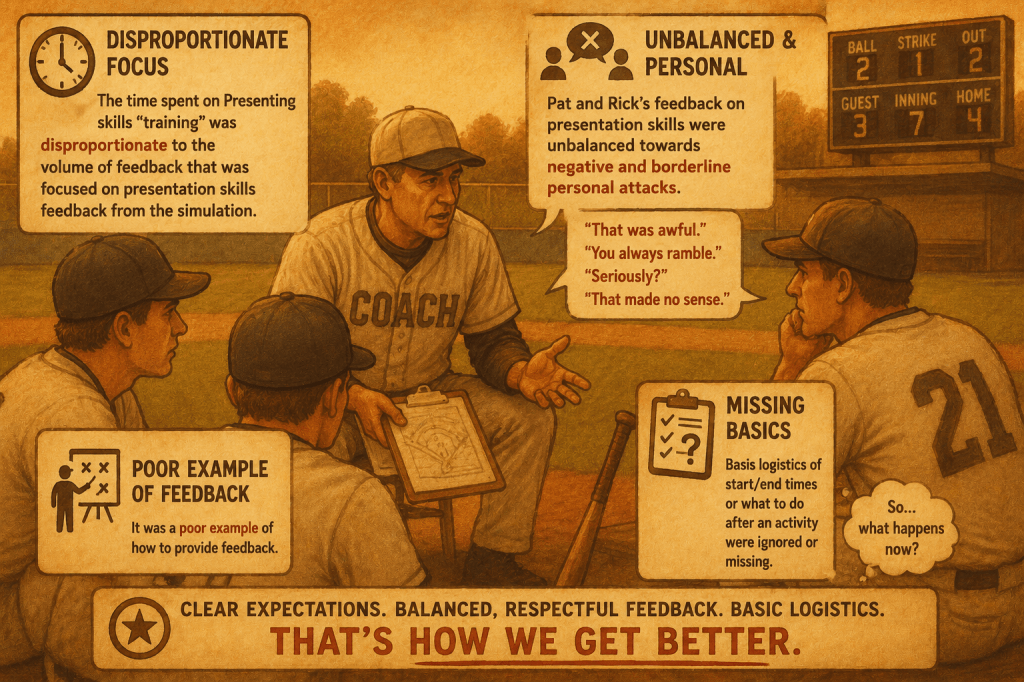
Mindless repetition just reinforces habits—good or bad. Mastery requires intentional repetition. That means doing the reps with feedback, with focus, and with a willingness to adjust. In coaching, that’s why we break skills down into parts. We slow them down. We exaggerate the right move. We create constraints that force the athlete to execute correctly. We film. We correct. Then we repeat again.
In leadership, practice is just as important—but we often pretend it isn’t. We expect people to run effective meetings without ever practicing facilitation. We expect new managers to give great feedback without role-playing difficult conversations. We expect leaders to navigate conflict, coach performance, and drive change—often with no reps, no safe environment to learn, and no feedback loop.
Then we’re surprised when they struggle.
If we want mastery in leadership, we need to train it the way we train any skill: build reps in low-risk environments so people can perform in high-stakes moments. That’s where simulations, scenarios, and practice conversations matter. It’s why the best leadership programs aren’t lecture-heavy—they’re experience-heavy. They create repetition: practice, debrief, adjust, reflect.
Repetition also builds trust.
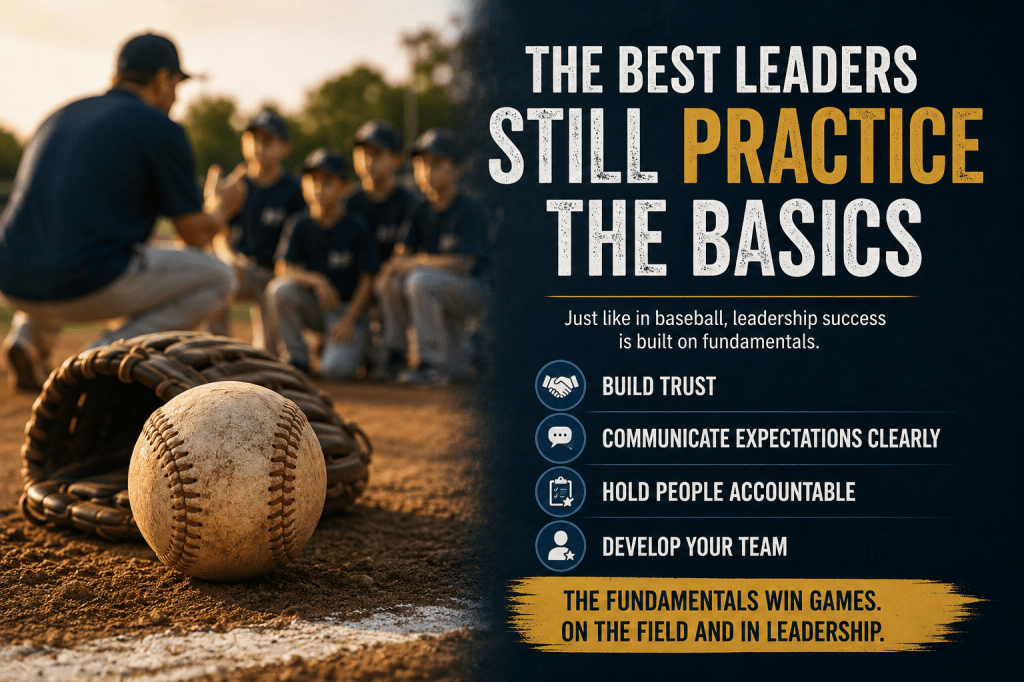
On a team, the people you trust most are the ones who are consistent. They show up the same way. They handle pressure. They do the fundamentals. That consistency is rarely personality—it’s preparation.
So if you’re coaching athletes or developing leaders, here’s the challenge: Don’t just teach the concept. Design the reps. Ask: What does great look like? What are the fundamentals? What’s the smallest version of the skill we can practice today? How do we get immediate feedback? What’s the next rep? Because mastery isn’t a mystery. It’s practice—done on purpose—over time.
At nearly every level of sport, standout performers are easy to identify. They are often more physically gifted than their peers, and it shows quickly—both in practice and in games. Sometimes it’s raw athleticism; other times it’s skill, instincts, or confidence. They may throw harder, hit farther, or field more cleanly, but one way or another, they separate themselves. These are your A players.
As coaches, it’s natural to gravitate toward them. They enjoy extra work, progress quickly, and often make coaching feel rewarding. Quite frankly, A players can make us look like very good coaches. They respond to instruction, apply feedback immediately, and produce visible results.
But teams are not built on A players alone.
Most rosters include a mix of A, B, and C players—and effective coaching requires attention to all three. When we focus exclusively on our top performers, we risk neglecting the rest. If we don’t invest time and effort in our B and C players, that’s where they will remain. Worse, they may disengage altogether or seek out another coach who is willing to help them grow.
The same dynamic exists in the corporate world. Leaders often rely on their “A players” for critical work, stretch assignments, and added responsibility. These are the people we trust to deliver results, so we give them more—and often keep giving them more—until they are stretched to the point of burnout or diminished performance. Meanwhile, B and C players are left underutilized. This doesn’t mean every employee receives the same opportunities, but it does mean every employee deserves some opportunity. Development requires exposure. Growth requires challenge. Leaders must be willing to test assumptions, offer stretch assignments thoughtfully, and see what others are capable of when given the chance. Great leaders—like great coaches—develop depth. They don’t just rely on their A players; they grow the Bs and Cs so tomorrow’s A players are already in the makin
As a young player and an always learning coach, I specialized in catching. When I transitioned into coaching, I naturally began working with catchers—a role I still enjoy today. At the time, we were taught a very specific way to position our bodies depending on the situation. There were three distinct stances, all variations of a traditional squat with both feet flat on the ground. The only real difference among them was the depth of the crouch.
Back then, if I saw a catcher using a one-knee stance, I’d immediately assume they were being lazy–I might have even said so out loud. But a few years ago, a professional catching coach began to challenge that long-standing belief. He analyzed extensive performance data and uncovered a surprising truth: catchers were more effective when working from one knee. While situational context still mattered, the overall benefits were clear. The one-knee stance significantly improved pitch framing—helping secure borderline calls in favor of the pitcher—and didn’t negatively impact the catcher’s ability to block or throw. Today, if you watch any professional, college, or even high school game, you’ll notice most catchers are on one-knee. It’s still early, but in addition to improved performance metrics, this technique may also help reduce long-term wear and tear on catchers’ legs and knees.
This shift in approach reminds me of how leadership has evolved. When I first entered the field, the idea of employee engagement was rarely discussed. Leadership was primarily about getting the job done—empathy and connection weren’t part of the equation. But we’ve since learned that managers who genuinely care about their people can reduce turnover and improve performance.
Perhaps the most dramatic shift facing us now is the integration of AI in the workplace. Many of us are still learning what AI can—and cannot—do, but one thing is certain: we must be willing to adapt. In the world of leadership development, the implications may be different than in fields like tax accounting, but the principle remains the same. Understanding how to use AI wisely—and where human insight still prevails—is crucial. As one of my colleagues often says, “AI might not take your job, but someone who knows how to use it probably will.” Whether you’re crouching behind the plate or navigating changes in your professional role, one thing is clear: getting stuck in old ways is not a strategy for success
One of the clearest truths in baseball and softball—especially when it comes to hitting—is that failure is inevitable. Even at the highest levels of the game, success is measured differently. If a Major League Baseball player gets a hit in just one out of every three at-bats, he’s considered elite—Hall of Fame worthy, even. In college baseball, that rate drops to two in five. Younger players may succeed half the time, but even that means failure is just as common as success.
And yet, failure is where the real growth happens.
When players strike out, miss a ground ball, or make an error in the field, they learn. They make adjustments. They become more resilient. Success feels great, but it rarely teaches as deeply or as quickly as failure does. When everything goes perfectly, it usually means the level of difficulty isn’t high enough. To keep growing, players must be tested. The challenge must evolve.
This principle applies just as strongly in leadership and organizational development. Employees and team members grow most when they’re given stretch assignments—challenges that push them beyond their comfort zones and carry a real risk of failure. These are the moments that demand problem-solving, resilience, and innovation. Without that pressure, growth stalls.
That’s why, in leadership training and development programs, we often design games, scenarios, or simulations that are harder than real-life situations. It’s not about frustrating participants—it’s about creating space for learning. When people struggle in a safe environment, they develop strategies, insights, and confidence that carry over into their day-to-day roles.
Leaders should not shield their teams from failure. Instead, they should create environments where people are encouraged to take calculated risks, experiment with new approaches, and learn from what doesn’t go as planned. That’s where growth happens—not just for individuals, but for the entire organization.
The truth is, success is easy to celebrate, but failure is what shapes us. Whether on the field or in the boardroom, the most valuable lessons often come after we’ve missed the mark. If we’re willing to reflect, adapt, and keep going, failure becomes one of our greatest teachers.
So let your people try hard things. Let them fail—and then help them learn. That’s how champions are made.
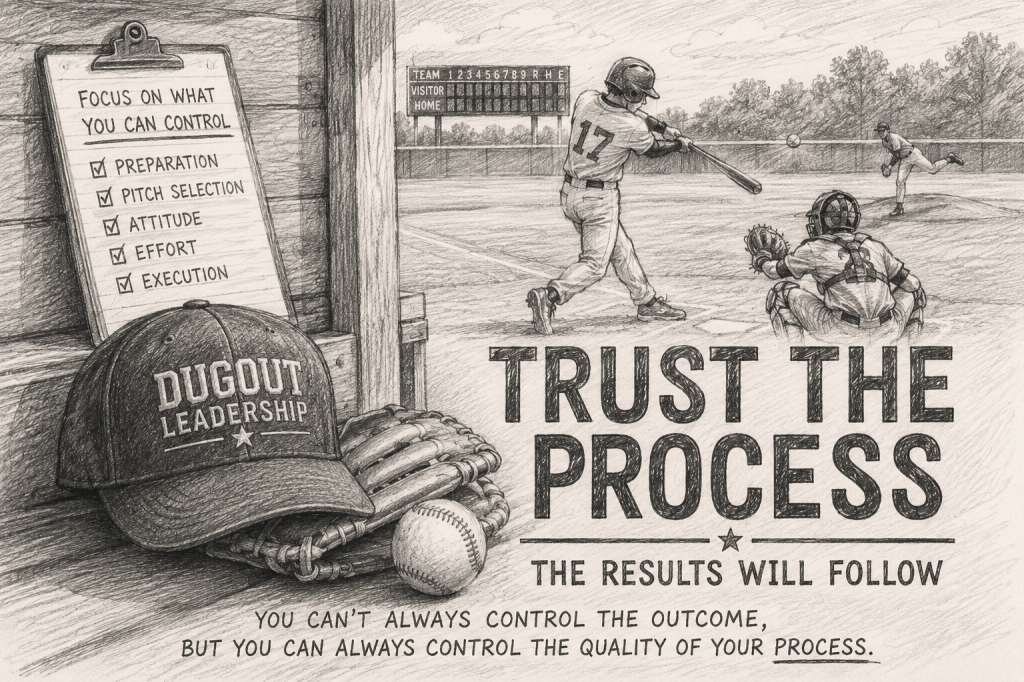
One of my favorite saying when working with a young hitter is, “Swing hard in case you hit it.” It’s a light-hearted phrase that gets a laugh, but it also carries a deeper truth. I’ve worked with young players for years, and one common habit I notice—especially among those just learning to hit—is the tendency to guide the bat to the ball. Instead of committing fully to the swing, they hold back, unsure if they’ll make contact. Ironically, that hesitation often prevents success. The more they try to control the outcome, the less likely they are to connect.
When I say, “Swing hard in case you hit it,” I’m reminding them to be bold. To commit. To trust the process and give themselves a real chance at success—even if they don’t connect every time.
This idea translates far beyond baseball. In the world of leadership, success often comes from doing exactly that: swinging hard. Taking smart risks. Trying new things. Giving your best effort even when the outcome is uncertain.
Too often, leaders play it safe. They guide their actions cautiously, hoping to avoid mistakes or criticism. But innovation doesn’t come from playing it safe. Growth doesn’t happen in the comfort zone. It happens when you stretch your boundaries, test bold ideas, and learn from what doesn’t work.
Of course, not every risk will pay off. Sometimes, you’ll miss. Sometimes, you’ll strike out. But other times, you’ll connect—and those moments can lead to breakthrough results, deeper trust, and new opportunities. And just like with young hitters, even the misses teach you something that improves your swing next time.
The best leaders I know model this kind of courage. They encourage experimentation. They give their teams permission to take bold swings without fear of failure. They lead with the belief that playing it safe is often the biggest risk of all.
So whether you’re in the batter’s box or the boardroom, the principle holds true: don’t just try to make contact—swing with intent. Swing hard. You just might hit it—and when you do, the result could be something extraordinary.
Mike Tyson once said, “Everyone has a plan until they get punched in the face.” As blunt as it sounds, there’s truth in that statement—especially for coaches and leaders. Planning is essential. But adaptability is what separates those who lead well under pressure from those who simply hope for ideal conditions.
Every coach, manager, or team leader starts with a plan. Whether it’s a game strategy, a quarterly business goal, or a meticulously organized event, we map out what we expect to happen. But then, something changes. Something unexpected happens—something that “punches you in the face”—and your plan is no longer viable.
As a baseball coach, I always enter a game with a clear pitching plan. Who’s starting, how many innings they’ll go, who’s coming in for relief—it’s all lined up. But then, the pitcher I expected to last three or four innings walks six batters in the first. Suddenly, we’re scrambling for replacements, rethinking strategy on the fly, and piecing together innings however we can. The plan just took a punch.
The same thing happens in the corporate world. I once helped plan plan an annual leadership meeting for over 1,200 managers. Weeks of logistics, scheduling, materials, and facilitator coordination had gone into it. Then—an ice storm. Only a third of our participants could make it. Some of our facilitators and key presenters were stranded. Printed materials didn’t arrive. It was another unexpected blow. In both cases, the solution wasn’t to cancel. It was to regroup. In the baseball game, we found a way to mix and match pitchers, adjusting our expectations in real time. At the leadership meeting, we leaned into flexibility—reworking group sizes, adapting activities, and getting creative with what we had. Was it perfect? No. Was it effective? Absolutely.
Leaders don’t earn trust by how they perform when everything goes to plan. They earn it by how they respond when nothing does. When the unexpected happens—and it always will—the best leaders stay composed, act decisively, and find ways to move forward.
So yes, Mike Tyson was right. You will get hit in the face. The question is: how will you respond when you do?
In both baseball and the professional world, the amount of data available to us has grown tremendously. Metrics, analytics, dashboards, and reports offer insights into everything from performance trends to individual behaviors. For coaches, players, people managers, and business leaders, this data can be incredibly useful, but also overwhelming—and it’s not always definitive. The real challenge lies in knowing when to lean on the data, and when to trust your instincts.
Take baseball, for example. A coach might have a spreadsheet or an iPad full of stats showing unfavorable pitcher-hitter matchups. The data may say it’s time to pull the pitcher. But maybe the coach sees something else—the pitcher’s body language, his rhythm, the confidence he’s showing on the mound. Maybe he’s locked in. Letting him stay in, even against the statistical odds, might not just win you the inning—it might earn the player’s long-term trust and elevate the culture of your team. Sometimes it won’t work out. But part of leadership is owning those calls and recognizing that people aren’t robots, and performance isn’t always predictable.
The same is true in the corporate world. Imagine a sales representative whose numbers are off the charts. The data says they’re performing at an elite level. But as a leader, your instincts tell you something’s off. Maybe their success is due to temporary market conditions, or perhaps the bulk of their revenue is coming from one large client that isn’t sustainable. Even though the dashboard is lighting up green, your gut is telling you to dig deeper, or maybe even consider rebalancing their territory to protect the long-term integrity of your sales strategy.
In both scenarios, the data gives you information—but it doesn’t make the decision for you. That’s your job as a leader. Data should inform your judgment, not replace it. The best leaders know how to balance the objective with the intuitive. They understand that numbers are powerful, but so is experience, human behavior, and context. They ask themselves: What is the data telling me? And just as importantly: What is it not telling me?
There’s no formula for getting this right every time. But with experience, reflection, and feedback, you sharpen your ability to discern when to follow the numbers and when to follow your gut. And over time, your “gut” becomes more than a feeling—it becomes informed intuition, shaped by everything you’ve learned along the way.
Ultimately, leadership is about making the tough calls. Sometimes the safe bet is to follow the metrics. Other times, the right move is the one the data can’t quite see. Learning to walk that line—confidently and responsibly—is what separates good decision-makers from great ones.
Effective leadership—in both sports and business, —requires more than understanding the overall dynamics of a group. It demands the ability to recognize and adapt to the unique needs, personalities, and motivations of each individual. Just as every team has its own collective identity, every person on that team brings their own background, communication style, and emotional makeup to the table. Successful leaders take this into account and tailor their approach accordingly.
In baseball , for example, you quickly learn that what works for one player may not work for another. Some players respond well to direct, even blunt, feedback—they appreciate the clarity and rise to the challenge. Others may shut down or lose confidence if approached the same way. The art of coaching, then, lies in knowing who needs a push and who needs support, who benefits from space to fail and learn, and who needs guidance before mistakes are made. The same principle applies to leading teams in the workplace. I always recognize this during “mound visits”—when the pitcher might be struggling or needs to rest the coach goes for a visit. I always tried to learn exactly how to help that pitcher respond. Sometimes it was direct and to the point sometimes it was with a joke. Knowing which pitcher needed what is the key.
In the corporate world, understanding how to treat individuals isn’t about favoritism or lowering standards—it’s about helping each person perform at their best. Some employees thrive with autonomy; others excel with structure. Some value public recognition; others prefer quiet validation. Leaders who take time to learn these preferences build stronger trust, increase engagement, and drive better performance across the board.
Of course, this kind of individualization takes effort. It requires observation, listening, and a willingness to ask questions. But the payoff is significant. When people feel seen and understood, they’re more likely to commit, collaborate, and contribute meaningfully to shared goals.
Adapting your style isn’t about being inconsistent—it’s about being intentional. It’s about showing respect for the differences that make each person valuable. Great leaders don’t treat everyone the same; they treat everyone with the same level of care, curiosity, and commitment. That’s what unlocks potential—one individual at a time.
5. Knowing When to Trust the Data—and When to Trust Your Gut
In both baseball and the professional world, the amount of data available to us has grown exponentially. Metrics, analytics, dashboards, and reports offer insights into everything from performance trends to individual behaviors. For coaches, players, people managers, and business leaders, this data can be incredibly useful, but also overwhelming—and t it’s not always definitive. The real challenge lies in knowing when to lean on the data, and when to trust your instincts.
Take baseball, for example. A manager might have a spreadsheet or an iPad full of stats showing unfavorable pitcher-hitter matchups. The data may say it’s time to pull the pitcher. But maybe the manager sees something else—the pitcher’s body language, his rhythm, the confidence he’s showing on the mound. Maybe he’s locked in. Letting him stay in, even against the statistical odds, might not just win you the inning—it might earn the player’s long-term trust and elevate the culture of your team. Sometimes it won’t work out. But part of leadership is owning those calls and recognizing that people aren’t robots, and performance isn’t always predictable.
The same is true in the corporate world. Imagine a sales representative whose numbers are off the charts. The data says they’re performing at an elite level. But as a leader, your instincts tell you something’s off. Maybe their success is due to temporary market conditions, or perhaps the bulk of their revenue is coming from one large client that isn’t sustainable. Even though the dashboard is lighting up green, your gut is telling you to dig deeper, or maybe even consider rebalancing their territory to protect the long-term integrity of your sales strategy.
In both scenarios, the data gives you information—but it doesn’t make the decision for you. That’s your job as a leader. Data should inform your judgment, not replace it. The best leaders know how to balance the objective with the intuitive. They understand that numbers are powerful, but so is experience, human behavior, and context. They ask themselves: What is the data telling me? And just as importantly: What is it not telling me?
There’s no formula for getting this right every time. But with experience, reflection, and feedback, you sharpen your ability to discern when to follow the numbers and when to follow your gut. And over time, your “gut” becomes more than a feeling—it becomes informed intuition, shaped by everything you’ve learned along the way.
Ultimately, leadership is about making calls. Sometimes the safe bet is to follow the metrics. Other times, the right move is the one the data can’t quite see. Learning to walk that line—confidently and responsibly—is what separates good decision-makers from great ones.