One of the hardest things about baseball and softball is that the results are obvious, but the process that created those results is often invisible.
A hitter can flare a weak pop-up that drops between two fielders or hit a slow ground ball that finds a hole. The swing wasn’t particularly good, yet the box score records a hit. As the old baseball saying goes, “It looks like a line drive in the box score.”
The opposite is just as true.
A player can barrel a baseball perfectly, only to hit it directly at an outfielder or watch an infielder make a spectacular play. The process was excellent, but the result wasn’t. That’s one of the realities of the game: the outcome doesn’t always reflect the quality of the decision or execution.
The same principle applies to coaches.
A manager may decide to change pitchers because every piece of information suggests it’s the right move. Sometimes that pitcher gives up the game-winning hit. That doesn’t automatically make the decision wrong. Good decisions can produce poor outcomes, just as poor decisions can occasionally produce good ones.
That’s why great coaches learn to reward the process, not just the result.
When one of my players hits a ball hard but is retired, I don’t want them hanging their head. Instead, I want them to understand that they did their job. More often than not, consistently making quality swings will produce positive results over time.
When a hitter comes back to the dugout after making an out, they often want to talk about their mechanics. One of the first questions I ask is, “Did you swing at a good pitch?”
That question matters because pitch selection is something the hitter controls. Whether the ball falls safely for a hit is not. Focusing on controllable actions instead of uncontrollable outcomes helps players develop confidence, consistency, and resilience.
Leadership works exactly the same way.
Leaders are judged by results, but sustainable success comes from building strong processes. A salesperson may identify the right prospects, prepare thoroughly, ask thoughtful questions, and use the CRM exactly as expected. Despite doing everything right, the customer may still choose a competitor. That doesn’t mean the salesperson failed. It means the process was sound, even if the outcome wasn’t.
Great leaders recognize effort, preparation, decision-making, and execution—not just the final score. When organizations only reward results, they unintentionally encourage shortcuts and luck. When they recognize great processes, they create habits that lead to consistent success over time.
Whether you’re coaching a baseball team or leading an organization, remember this: you can’t always control the outcome, but you can always control the quality of yce great results.
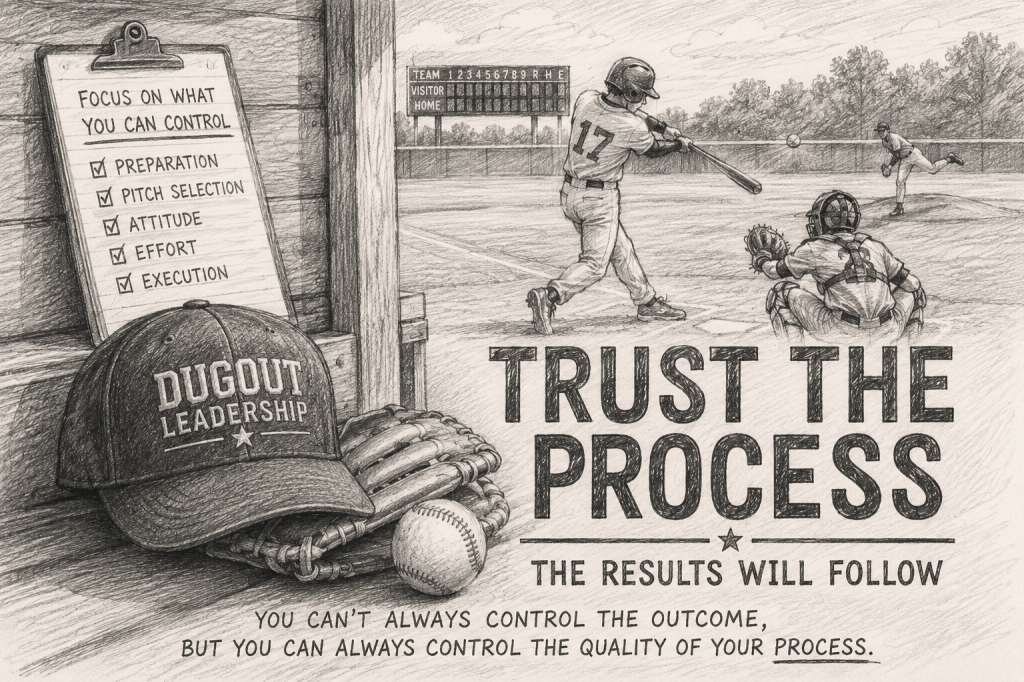
 Leadership Lessons from the DugOut
Leave a comment