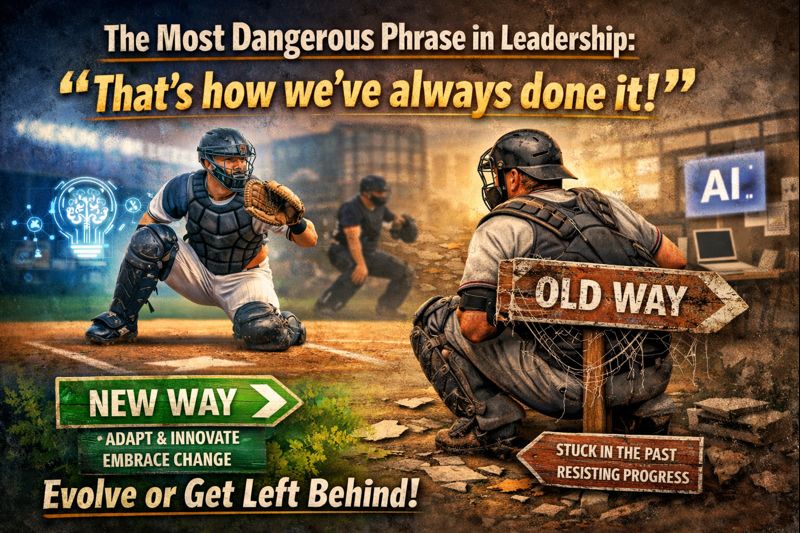
That’s how we’ve always done it!”
As a young player and an always learning coach, I specialized in catching. When I transitioned into coaching, I naturally began working with catchers—a role I still enjoy today. At the time, we were taught a very specific way to position our bodies depending on the situation. There were three distinct stances, all variations of a traditional squat with both feet flat on the ground. The only real difference among them was the depth of the crouch.
Back then, if I saw a catcher using a one-knee stance, I’d immediately assume they were being lazy–I might have even said so out loud. But a few years ago, a professional catching coach began to challenge that long-standing belief. He analyzed extensive performance data and uncovered a surprising truth: catchers were more effective when working from one knee. While situational context still mattered, the overall benefits were clear. The one-knee stance significantly improved pitch framing—helping secure borderline calls in favor of the pitcher—and didn’t negatively impact the catcher’s ability to block or throw. Today, if you watch any professional, college, or even high school game, you’ll notice most catchers are on one-knee. It’s still early, but in addition to improved performance metrics, this technique may also help reduce long-term wear and tear on catchers’ legs and knees.
This shift in approach reminds me of how leadership has evolved. When I first entered the field, the idea of employee engagement was rarely discussed. Leadership was primarily about getting the job done—empathy and connection weren’t part of the equation. But we’ve since learned that managers who genuinely care about their people can reduce turnover and improve performance.
Perhaps the most dramatic shift facing us now is the integration of AI in the workplace. Many of us are still learning what AI can—and cannot—do, but one thing is certain: we must be willing to adapt. In the world of leadership development, the implications may be different than in fields like tax accounting, but the principle remains the same. Understanding how to use AI wisely—and where human insight still prevails—is crucial. As one of my colleagues often says, “AI might not take your job, but someone who knows how to use it probably will.” Whether you’re crouching behind the plate or navigating changes in your professional role, one thing is clear: getting stuck in old ways is not a strategy for success
 Leadership Lessons from the DugOut
Leave a comment